
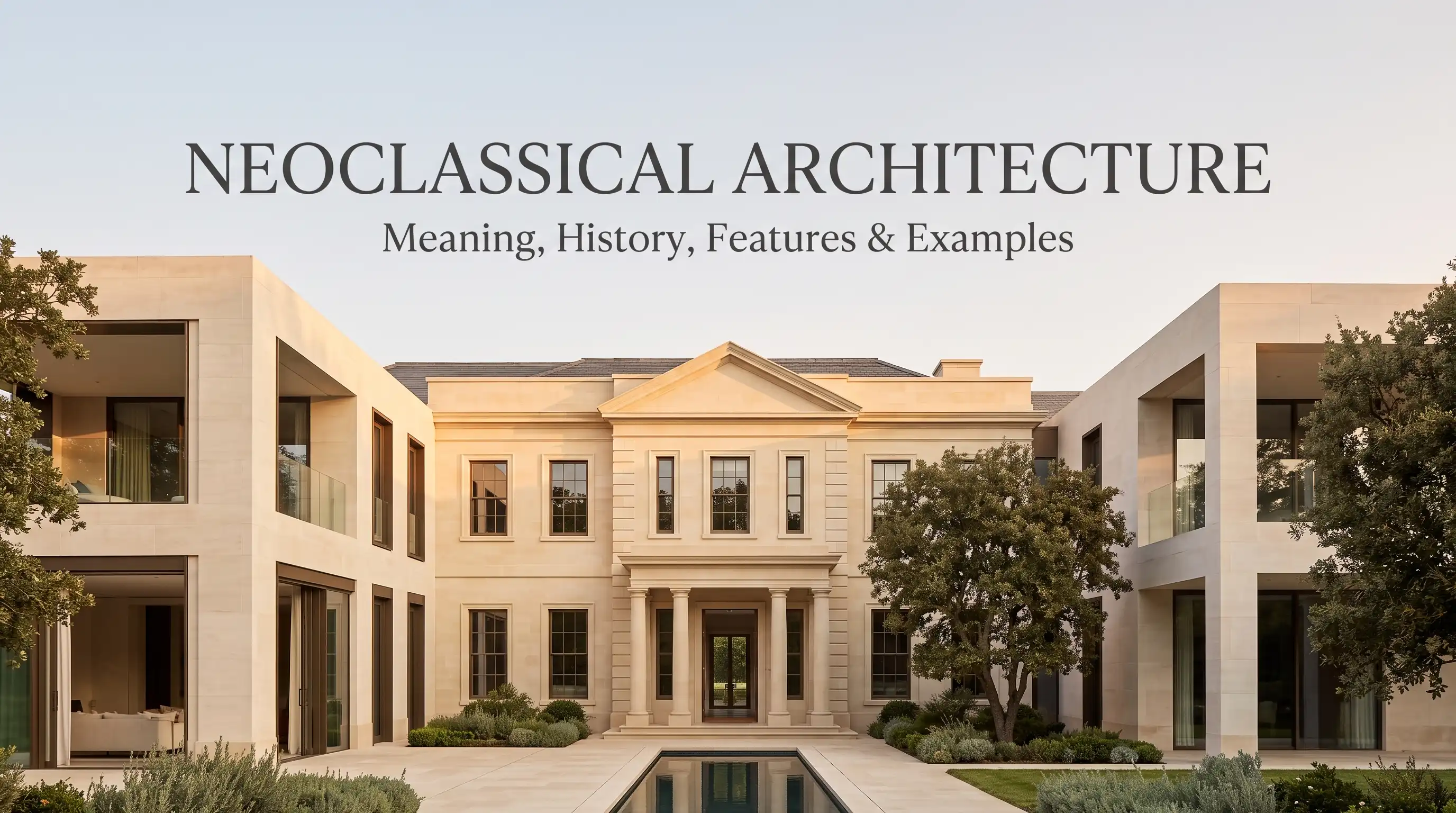
Neoclassicism is believed to be one of the most prominent architectural styles as it is based on architectural structures and designs of the ancient Greek and Roman era. Featuring such features as symmetry, proportions, geometrical shapes, columns, and plainness in decoration, this architectural style started developing in Europe and the United States from the 18th century.
At Whitesoul Studio, it’s important to know all about what neoclassical architecture is, particularly when this popular architectural style continues to influence modern architecture and home designs. In this article, learn about neoclassical architecture, its history, its features, and its design elements.
What Is Neoclassical Architecture?
Neoclassicism in architecture is the renaissance of the architectural philosophy derived from Ancient Greece and Rome. This style features simplicity, order, symmetry, proportion, and clarity, resulting in architecture with an emphasis on harmony and elegance.
The neoclassical style of architecture came into being by the mid-eighteenth century in Europe and later North America. Neoclassical architecture for Whitesoul Studio is an important reference point in the understanding of how classical ideas can be translated into advanced modern architecture.
Neoclassical Architecture History
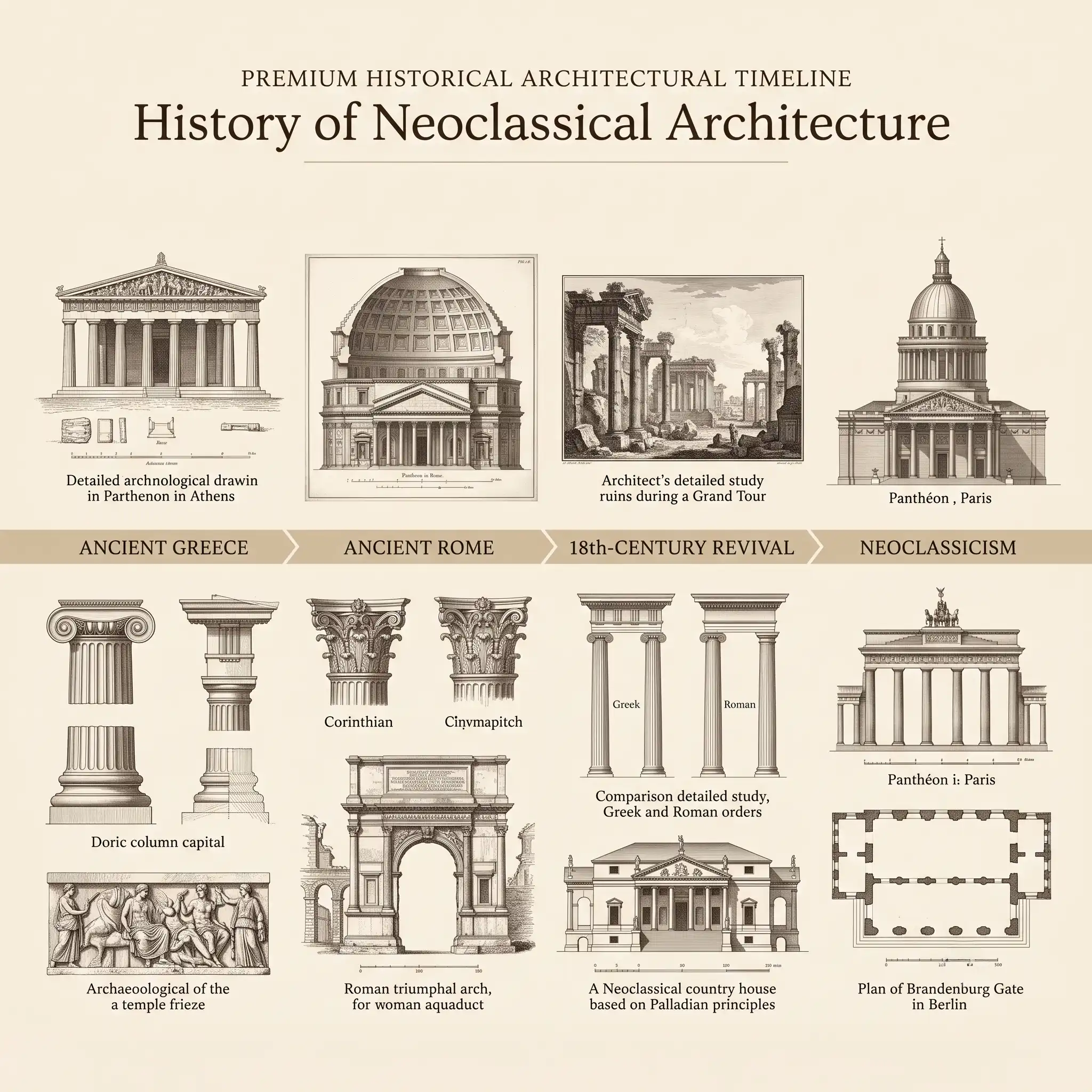
The history of neoclassical architecture is inseparably linked to the period of Enlightenment and the rise of archaeology in the 18th century. The excavations carried out on such locations as Pompeii and Herculaneum as well as the examination of the Greek and Roman structures stimulated architects to return to the classical tradition.
The publication of books about ancient buildings contributed to the popularization of knowledge about classical architecture in Europe. One of the most important publications of this kind was the book Antiquities of Athens, written by James Stuart and Nicholas Revett in 1762.
In contrast to previous architectural revivals of the classical tradition, Neoclassicism aimed at the more scholarly approach towards ancient architecture.

Characteristics of Neoclassical Architecture
There are specific characteristics of neoclassical architecture that are distinctive and make it easily recognizable throughout history and all over the world:
-
Symmetry and Proportion: The facades have symmetry with the central axis and two identical sides.
-
Classical Columns: Doric, Ionic, or Corinthian columns were popular and usually used to support porticos and entrances.
-
Pediments: Greek-inspired triangular gables are found on doorways, windows, and even facades.
-
Domes: Round domes inspired by such famous Roman buildings as Pantheon were widespread among neoclassical architecture.
-
Minimal Ornamentation: Unlike Baroque, neoclassical architecture does not use a lot of ornaments.
-
Grand Staircases and Porticos: Usually, there is a great emphasis on entrances that look imposing and majestic.
-
Use of Stone and Stucco: Materials used were inspired by classical buildings' longevity and durability.
All the principles of neoclassical architecture are still used to define facade design, proportions, and materials of construction by Whitesoul Studio.
Neoclassical Architecture and Classical Architecture
To fully comprehend neoclassical architecture and classical architecture, one must be aware that neoclassical architecture is a modern reintroduction, rather than the original classic art.
The emergence of classical architecture dated to ancient Roman and ancient Greek cultures, while neoclassical architecture came into being many centuries later through examination and application of classical architectural concepts. Therefore, while neoclassical architecture uses classical language, it employs it in accordance with the requirements of cultural, technological, and functional realities of the 18th and 19th centuries.
Read More - Neo-Classical vs Contemporary
Examples of Neoclassical Architecture
In the world of neoclassical architecture, we find that some of the notable buildings include:
-
The White House, USA – It is one of the most famous examples of neoclassical civic architecture, having a typical design.
-
The Panthéon, Paris – It features a dome that resembles the Roman version along with a classical portico.
-
The British Museum, London – It is famous due to its beautiful Ionic colonnade.
-
The Brandenburg Gate, Berlin – The structure is inspired by the classic gates of the Athenian Acropolis.
In residential buildings, we can see that neoclassical designs may reflect stunning villa facades, columned porches, and symmetrical structure.
Why Neoclassical Principles Still Matter Today
One of the reasons neoclassical architectures still remain popular is its combination of visual discipline and grandeur. Symmetry, proportions, columns, less complicated details, and clear geometry make it possible to achieve a design that can easily be recognized by generations afterward.
Whitesoul Studio draws upon these traits for its contemporary architecture and interior design projects. By reinterpreting these features, it is possible to keep the fundamentals of neoclassicism intact and, at the same time, transform materials, spatial design, technologies, and functions according to today’s needs.
Conclusion
The bottom line is that neoclassical architecture marks a big comeback of the order, ratio, and visual system of ancient Greece and Rome. Its story has something to do with the impact of archaeological discoveries, the Age of Enlightenment, and the revival of interest in classical architecture.
Neoclassical Architecture is found in various monumental designs starting from tremendous government establishments up to modern adaptations. Whitesoul Company may draw upon these stable principles to work on designs that combine classical beauty and modern needs.